The Contemporary African Art Market: Growth, Influence, and New Perspectives in 2026
Sustained Growth Marking a Structural Turning Point
The contemporary African art market has undergone significant evolution over the past several years, now clearly representing a structural turning point. Recent market reports, particularly those focused on 2024 outlooks and international dynamics, confirm a steady increase in sales volumes, a stronger presence at major art fairs, and enhanced visibility within leading auction houses.
This growth cannot be reduced to a temporary trend. Rather, it reflects a deeper structural movement driven by the professionalization of galleries, the emergence of a new generation of African collectors, and increasing institutional recognition of artists from the continent. Contemporary African art scenes are no longer perceived as peripheral but as fully established creative hubs actively contributing to the reshaping of the global art market.
Within this evolving landscape, specialized galleries play a decisive role by providing strategic support and ensuring long-term value development for artists. Lynart Store fully aligns with this dynamic through a carefully curated selection of contemporary artists whose practices contribute to this international expansion. The full selection of represented artists can be explored at https://lynartstore.com/.
Contemporary African Art as an Instrument of Soft Power
Beyond economic indicators, contemporary African art is increasingly asserting itself as a powerful instrument of cultural soft power. The continent’s creative industries are contributing to the redefinition of symbolic and aesthetic balances on the international stage.
Artists engage deeply with themes such as memory, identity, diaspora, and urban experience. Their works articulate heritage and contemporaneity, local anchoring and universal resonance. This ability to combine cultural specificity with global relevance appeals to an international audience seeking authenticity and meaning.
For collectors, this strategic dimension gives the contemporary African art market a value that extends beyond financial performance. It represents a structuring cultural space offering a renewed narrative within the global artistic landscape.
Ansou Niabaly: A Distinct Contemporary Signature
Within this broader movement, Ansou Niabaly holds a singular position. Represented by Lynart Store, he develops a body of work grounded in rigorous artistic research where materiality, memory, and visual narration intertwine with precision.
His practice reflects a contemporary exploration in which identity, emotion, and memory translate into a powerful visual language. Through his compositions, he proposes a vision that is both intimate and universal, naturally aligning with the current evolution of the contemporary African art market.
Works such as Radiant Heritage (2025) exemplify this synthesis of emotional intensity and formal discipline. Discover more about the artist at https://lynartstore.com/pages/ansou-niabaly and explore available works through the gallery at https://lynartstore.com/. The visibility provided by a structured online gallery strengthens international recognition and supports sustainable artistic development.

Ansou Niabaly - Radiant Heritage, Radiant Heritage (2025)
Leading African Artists and Auction Records
The rise of the African art market is not measured solely through emerging talents but also through the remarkable auction success of internationally recognized artists. Amoako Boafo, the Ghanaian artist who has become a major figure in the contemporary market, perfectly illustrates this dynamic. Several of his key works have exceeded 1.3 million dollars at international auctions, confirming sustained demand for his work among global collectors.
Similarly, the Ivorian artist Aboudia has established himself as one of the most active and visible contemporary African artists on the secondary market. His vibrant and expressive compositions have consistently attracted strong international attention, reinforcing interest in modern African art.
Works currently available through Lynart Store, such as Untitled (2022) by Aboudia and 6lack Free 6lack by Amoako Boafo, provide collectors with direct access to these powerful aesthetic approaches. These pieces offer a tangible entry point into understanding the stylistic development and market trajectory of influential African artists.
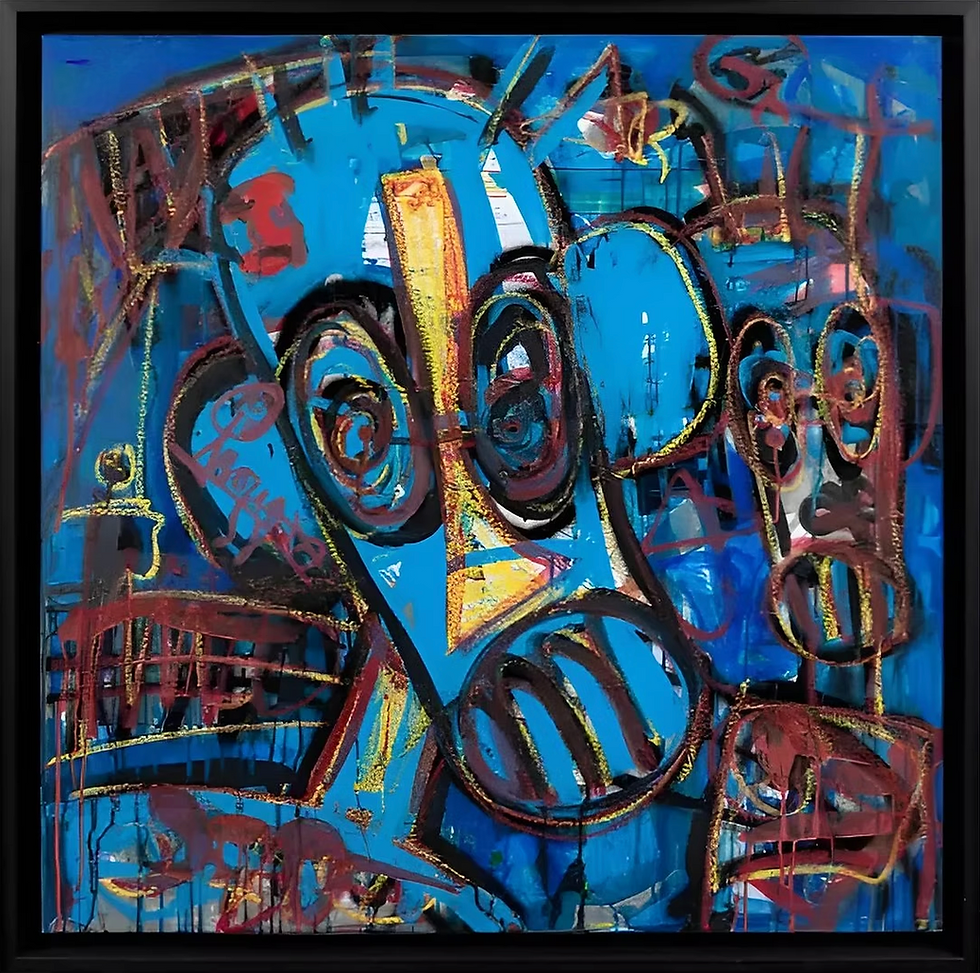
Aboudia - Untitled (2022)
Investing in Contemporary African Art: A Strategic Approach
Today, the contemporary African art market presents compelling characteristics for informed investors. Valuation margins remain significant compared to certain mature Western market segments. At the same time, the diversification of international buyer profiles contributes to stabilizing and expanding the collector base.
In an uncertain economic environment, art represents a tangible asset combining cultural significance and patrimonial value. Acquiring works through a structured gallery aligns with a coherent long-term value strategy.
The secondary market plays a fundamental role in consolidating artistic reputations. Auction results establish objective price benchmarks and enhance international credibility. Current market dynamics can be monitored through LLB Auction at https://www.llb-auction.com/app/auctions, a platform actively contributing to the structuring of the market.
Digitalization and Structuring: Drivers of Maturity
Digital transformation has profoundly reshaped the contemporary art ecosystem. Online sales now represent approximately 25 percent of the global art market, illustrating the lasting integration of digital channels into acquisition practices.
In 2022, the global online art market reached approximately 10.8 billion dollars, following growth of more than 575 percent over a decade. These figures reflect widespread adoption of digital platforms by collectors and growing confidence in online transactions.
This evolution promotes transparency, broadens access to artworks, and accelerates professionalization across the sector. Structured online galleries such as https://lynartstore.com/ actively contribute to this maturation by connecting artists and collectors on an international scale.
Toward Sustainable Consolidation of the African Market
The contemporary African art market continues to evolve toward stronger and more sustainable structuring. According to specialized analyses, the value of contemporary African artworks sold at auction has surpassed 63 million dollars, compared to approximately 47 million dollars just a few years earlier, reflecting a significant increase in total sales revenue across international markets.
Over a longer period, both the number of contemporary African artists present at auction and their overall turnover have tripled within a decade, signaling increased secondary market structuring and progressive integration into international circuits traditionally dominated by other regions.
Although global market pressures occasionally affect auction categories, the persistence of record sales and sustained volumes demonstrates that consolidation is underway, supported by a diversified and increasingly international collector base.
Conclusion
The contemporary African art market now stands as one of the most dynamic and structurally significant segments of the global art market. Its growth reflects a profound transformation driven by gallery professionalization, secondary market expansion, and the continent’s cultural affirmation on the international stage.
Through the representation of Ansou Niabaly and Lynart Store’s commitment to rigorous and coherent artistic valorization, this evolution becomes tangible and accessible. Exploring available works at https://lynartstore.com/ and following market dynamics via https://www.llb-auction.com/app/auctions allows collectors to actively participate in this new phase of consolidation.
FAQ – Contemporary African Art Market
Why is the contemporary African art market growing?
The contemporary African art market benefits from increased international visibility, greater gallery professionalization, and growing interest from collectors. It is progressively establishing itself as a structured and strategic segment of the global art market.
Is it relevant to invest in contemporary African art in 2026?
The market still offers strong appreciation potential and represents an attractive opportunity for portfolio diversification. Acquiring works through a structured gallery such as Lynart Store ensures a coherent and guided long-term investment approach.
How should one choose a contemporary African artist?
It is essential to assess the consistency of the artist’s practice, the quality of their gallery representation, and their visibility within the market. Evaluating the continuity of their work and their positioning within the artistic ecosystem helps determine long-term development and value potential.
What role do auctions play in the valuation of African artists?
Auctions play a decisive role in structuring the market. They establish price benchmarks, increase international visibility, and strengthen credibility among collectors and investors.


Comments